What Is GRI Reporting?
A Plain-English Guide for Beginners
Reading Time
4 min
Article Sections
6
Share Links
3
On This Page
Article Section
Introduction
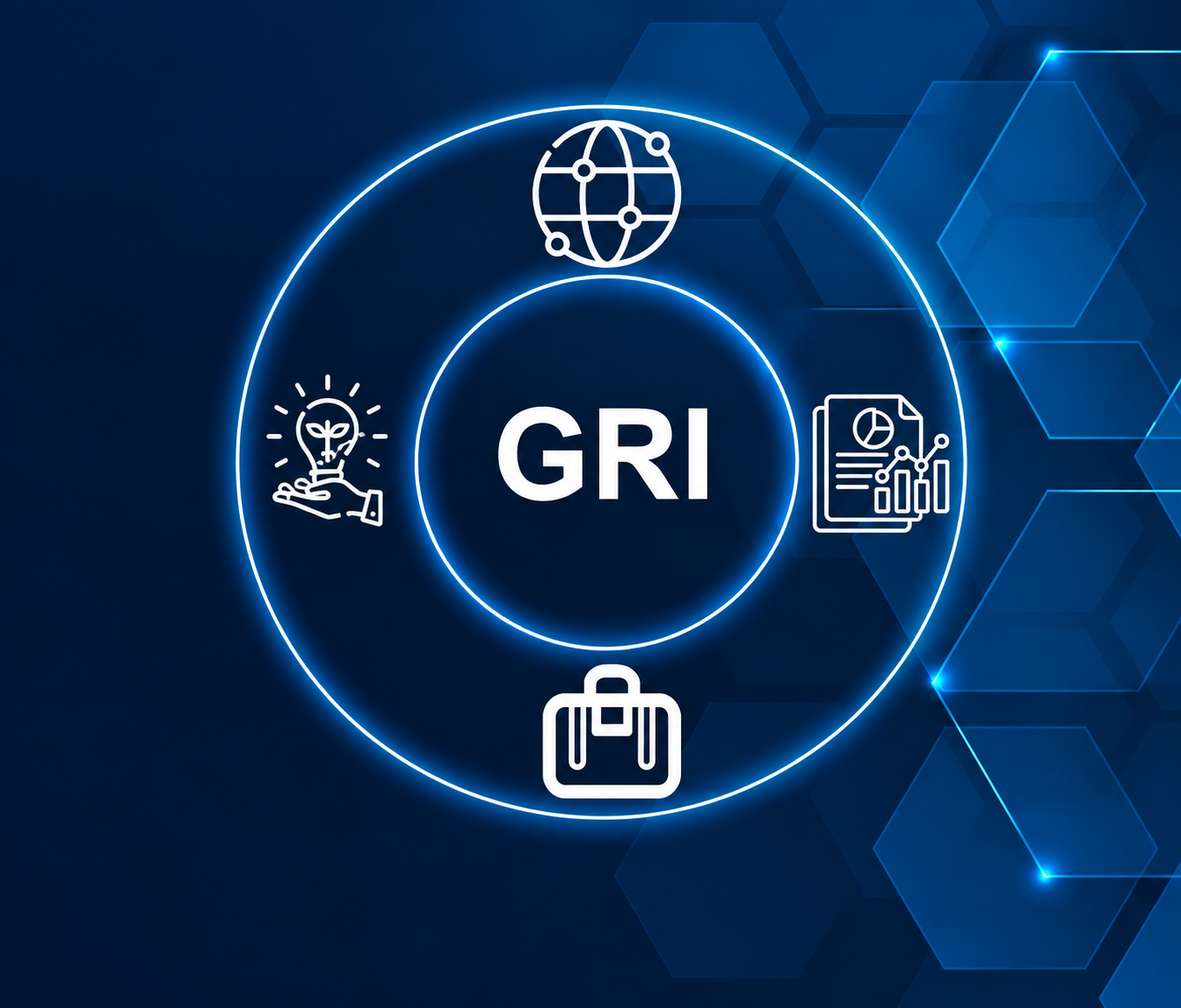
GRI stands for Global Reporting Initiative, an independent international organization behind the world's most widely used sustainability reporting standards. GRI reporting refers to disclosing an organization's economic, environmental, and social impacts using these Standards.
Confusion is common because GRI, ESG, BRSR, and climate reporting all get used interchangeably, even though each term means something specific. This guide exists to untangle that confusion for beginners.
This article covers GRI's purpose, who uses it, and how its Standards are structured, without assuming any prior sustainability reporting knowledge.
Article Section
What GRI Reporting Is and Who Uses It?
GRI Standards measure an organization's impacts on the economy, environment, and people, commonly referred to as sustainability impacts. Rather than focusing only on financial performance, GRI reporting asks organizations to disclose how their operations affect the world around them, from greenhouse gas emissions to labour practices to anti-corruption measures.
GRI Standards are used by organizations of all sizes and sectors, across many countries, along with investors, suppliers, students, and researchers who rely on GRI-based disclosures to compare organizations consistently. GRI created the first global sustainability reporting standards, and its Standards remain among the most widely referenced sustainability reporting frameworks in use today.
Article Section
How GRI Standards Are Structured?
The Three Types of GRI Standards
GRI Standards are organised into three types. Universal Standards, GRI 1: Foundation, GRI 2: General Disclosures, and GRI 3: Material Topics, apply to every organization using GRI, regardless of size or sector. Sector Standards provide tailored guidance for industries with significant sustainability impacts, such as oil and gas, mining, agriculture, and coal. Topic Standards cover specific issues, including emissions, water, biodiversity, and employment, and are selected based on what an organization determines to be material to its own impacts.
How They Work Together?
An organization starts with the Universal Standards to establish its reporting approach and general disclosures, layers in the relevant Sector Standard if one applies to its industry, and then reports using the Topic Standards that match the material topics it has identified. This layered structure is what allows GRI reporting to stay relevant across very different types of organizations.
Is GRI Reporting Mandatory?
GRI reporting is generally voluntary at a global level, though specific jurisdictions, listing requirements, or customer expectations can make elements of it effectively necessary for certain organizations. Whether GRI applies as a requirement in a particular situation depends heavily on where an organization is based and who it reports to.
Article Section
Where GRI Fits Among Other Terms?
GRI vs ESG
GRI and ESG are related but not interchangeable. ESG is a broad lens investors and analysts use to evaluate an organization, while GRI is a specific Standards system organizations use to structure and disclose their sustainability reporting. An ESG evaluation may draw on GRI-based disclosures, but the two terms describe different things.
GRI vs BRSR in India
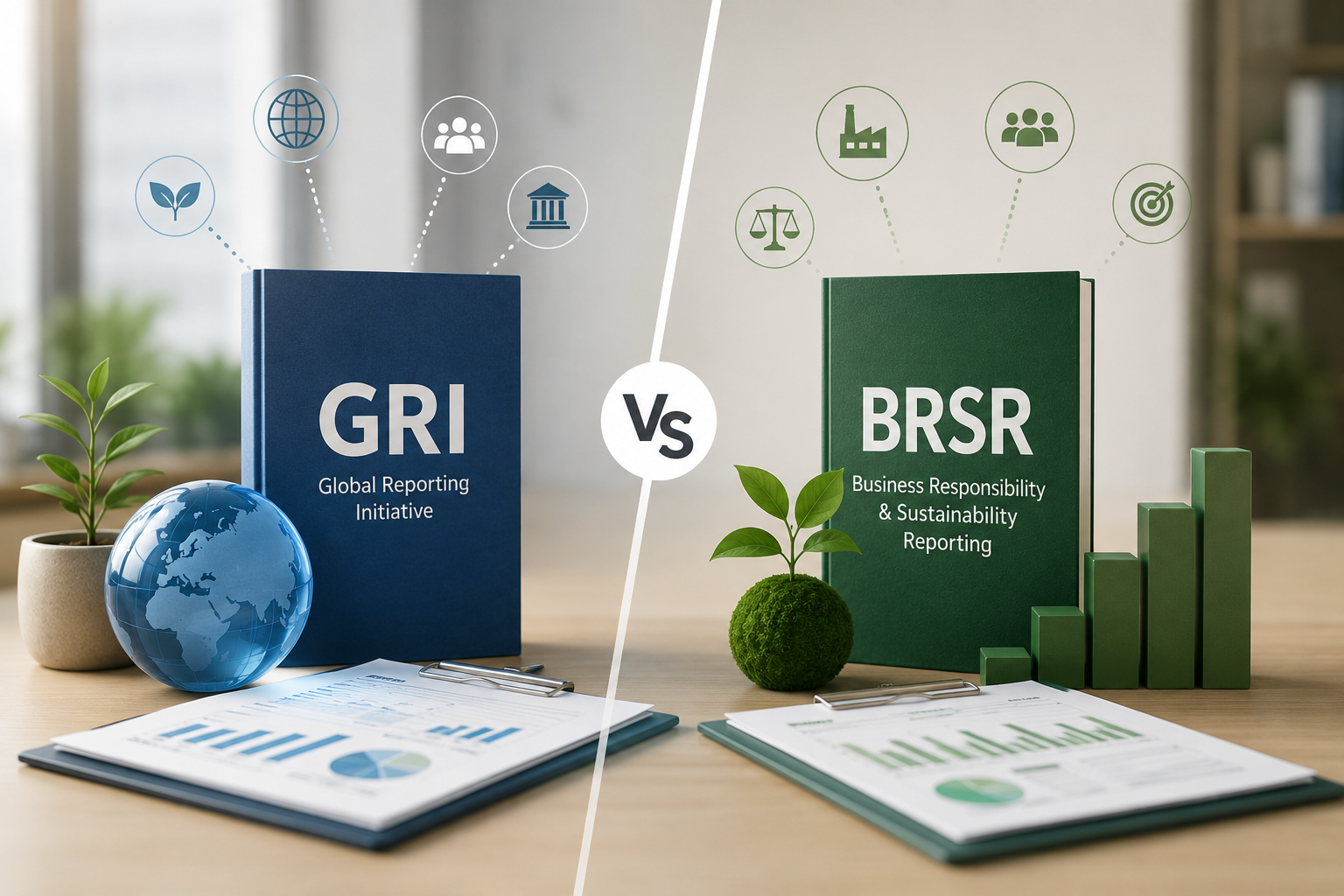
In India, BRSR, the Business Responsibility and Sustainability Report, is a disclosure format mandated by SEBI for listed companies, while GRI is a globally used, largely voluntary Standards system. The two share some overlapping themes, but they are not interchangeable formats, and understanding the difference matters for any Indian company navigating both.
Where to Start?
Beginners typically start with GRI 1: Foundation, which explains the purpose and structure of the Standards, before moving on to specific disclosures.
Article Section
Conclusion
GRI reporting is best understood as a Standards system, not a single form to fill out. It gives organizations a structured way to disclose their economic, environmental, and social impacts.
For readers ready to go further, the natural next step is understanding how the three Standards types, Universal, Sector, and Topic, work together in practice.
Article Section
Frequently Asked Questions
What is GRI reporting?
GRI reporting is the practice of disclosing an organization's economic, environmental, and social impacts using the Global Reporting Initiative's Standards.
What does GRI stand for?
GRI stands for Global Reporting Initiative, the independent organization that created and maintains the Standards.
What does GRI reporting measure?
It measures an organization's impacts on the economy, environment, and people, covering topics such as emissions, water use, labour practices, and governance.
Is GRI the same as ESG reporting?
No, ESG is a broad evaluation concept used by investors, while GRI is a specific Standards system organizations use to structure their sustainability disclosures.
Is GRI mandatory?
Generally no at a global level; it is largely voluntary, though specific jurisdictions or listing requirements can make elements of it effectively necessary.
Keep Reading
Related Blogs
ESG Reporting
GRI vs BRSR
Reconciling Two Reporting Standards Without Duplicating Work
Read more
ESG Reporting / Compliance
ESG Reporting Timeline in India: What Gets Filed When and Who Is Responsible for What
A regulatory reference guide for company secretaries, CFOs, and sustainability heads navigating SEBI's BRSR compliance calendar.
Read more
ESG Reporting / Assurance
ESG Assurance in India
What 'Reasonable Assurance' Actually Means When Auditors Sign Your BRSR
Read moreNext Step
Ready to turn ESG complexity into strategic advantage?
Talk to ESG Astraa about disclosures, climate strategy, governance controls, and execution support for your team.