Is GRI Reporting Mandatory?
Who Needs to Use the GRI Standards?

Reading Time
4 min
Article Sections
6
Share Links
3
On This Page
Article Section
Introduction
A legal team asks whether their company is required to do GRI reporting and gets conflicting answers depending on who they ask, a compliance consultant, an investor relations lead, or a sustainability manager.
The confusion is understandable. With over 10,000 organizations across more than 100 countries already publishing GRI-aligned reports, the line between voluntary and expected has blurred considerably.
This article separates legal obligation from practical necessity, and identifies who actually needs to pay attention to GRI.
Article Section
The Core Answer
The core answer is straightforward: no jurisdiction legally mandates GRI reporting itself. GRI remains, at its foundation, a voluntary global framework that organizations choose to adopt rather than a law they must comply with.
That said, describing GRI as simply voluntary undersells how deeply it has become embedded in regulatory frameworks that are themselves mandatory. In the European Union, for example, GRI and EFRAG confirmed a high level of interoperability between GRI and the European Sustainability Reporting Standards used under the Corporate Sustainability Reporting Directive. This means organizations legally required to report under CSRD can reuse much of the data and structure they have already built for GRI, even though CSRD itself does not require GRI directly.
Article Section
Legal Status by Context
The Legal Answer
No country requires organizations to report under GRI as a matter of law. The scale of GRI adoption, more than 10,000 organizations across over 100 countries, reflects organizations choosing to use the framework, not a legal obligation compelling them to.
Where It Gets Mandatory-Adjacent?
The European Union's Corporate Sustainability Reporting Directive requires large companies and listed SMEs to report using the European Sustainability Reporting Standards, not GRI itself. However, GRI and EFRAG's confirmed interoperability means companies with an existing GRI-built dataset are well positioned to meet ESRS requirements with substantially reused data, which is why many teams experience GRI and CSRD compliance as closely linked even though they remain legally separate.
India Specifically
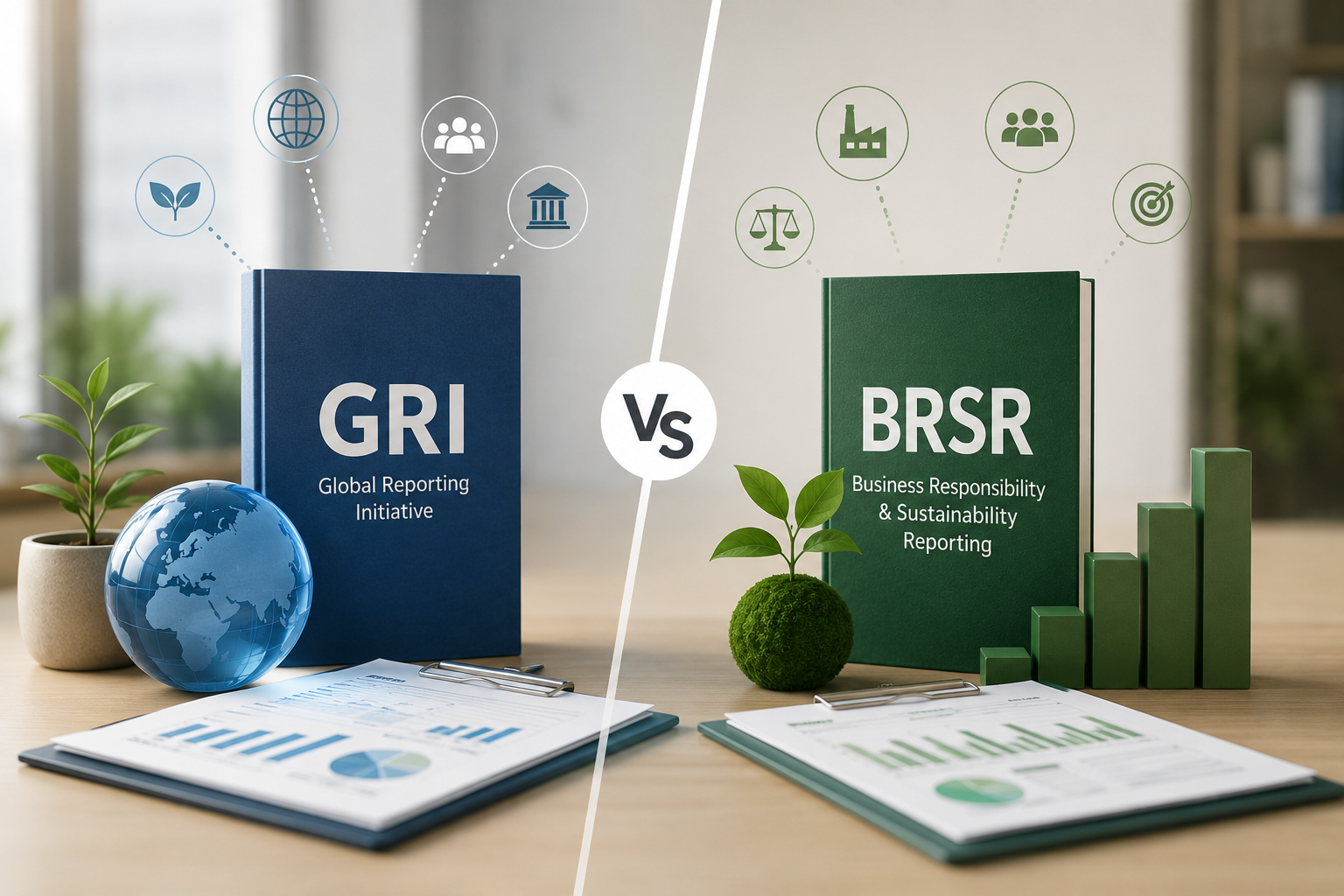
In India, GRI reporting is not itself mandatory. SEBI's Business Responsibility and Sustainability Report, or BRSR, is the actual mandatory disclosure format for listed companies. GRI does not replace BRSR, the two are separate systems, and understanding exactly how they compare requires looking at that comparison directly.
Article Section
Who Actually Needs to Care?
Who Actually Needs to Care?
Listed companies operating in or selling into markets with CSRD-adjacent expectations, suppliers to large EU-based or globally listed buyers, and exporters facing investor due diligence are the groups most likely to encounter GRI expectations in practice, even without a direct legal requirement.
The Supply Chain Reality
Even small and medium enterprises with no legal reporting obligation of their own are increasingly asked for GRI-aligned sustainability data by larger corporate clients conducting their own supply chain due diligence.
How to Decide?
A practical starting logic works well here: check your listing jurisdiction's requirements, check what your major customers or investors are actually asking for, and check whether a GRI Sector Standard applies to your industry specifically.
Article Section
Conclusion
GRI reporting is legally voluntary everywhere, but practically expected for a growing share of organizations, whether through regulatory interoperability, investor pressure, or supply chain requirements.
Readers whose next question is specifically how GRI compares to India's BRSR should look at that comparison directly, since the two systems, while related in spirit, are not interchangeable.
Article Section
Frequently Asked Questions
Is GRI reporting mandatory?
No, GRI reporting is not legally mandated in any jurisdiction; it remains a voluntary global framework.
Is GRI mandatory in India?
No, SEBI's BRSR is India's mandatory disclosure format for listed companies, not GRI.
Who needs GRI?
Organizations operating in CSRD-adjacent markets, suppliers to large global buyers, and exporters facing investor due diligence are most likely to need GRI-aligned reporting in practice.
Does GRI replace BRSR?
No, GRI and BRSR are separate systems; GRI does not replace India's mandatory BRSR requirement.
Does the EU's CSRD require GRI reporting?
No, CSRD requires reporting under the European Sustainability Reporting Standards, though these are highly interoperable with GRI.
Keep Reading
Related Blogs
ESG Reporting
GRI vs BRSR
Reconciling Two Reporting Standards Without Duplicating Work
Read more
ESG Reporting / Compliance
ESG Reporting Timeline in India: What Gets Filed When and Who Is Responsible for What
A regulatory reference guide for company secretaries, CFOs, and sustainability heads navigating SEBI's BRSR compliance calendar.
Read more
ESG Reporting / Assurance
ESG Assurance in India
What 'Reasonable Assurance' Actually Means When Auditors Sign Your BRSR
Read moreNext Step
Ready to turn ESG complexity into strategic advantage?
Talk to ESG Astraa about disclosures, climate strategy, governance controls, and execution support for your team.