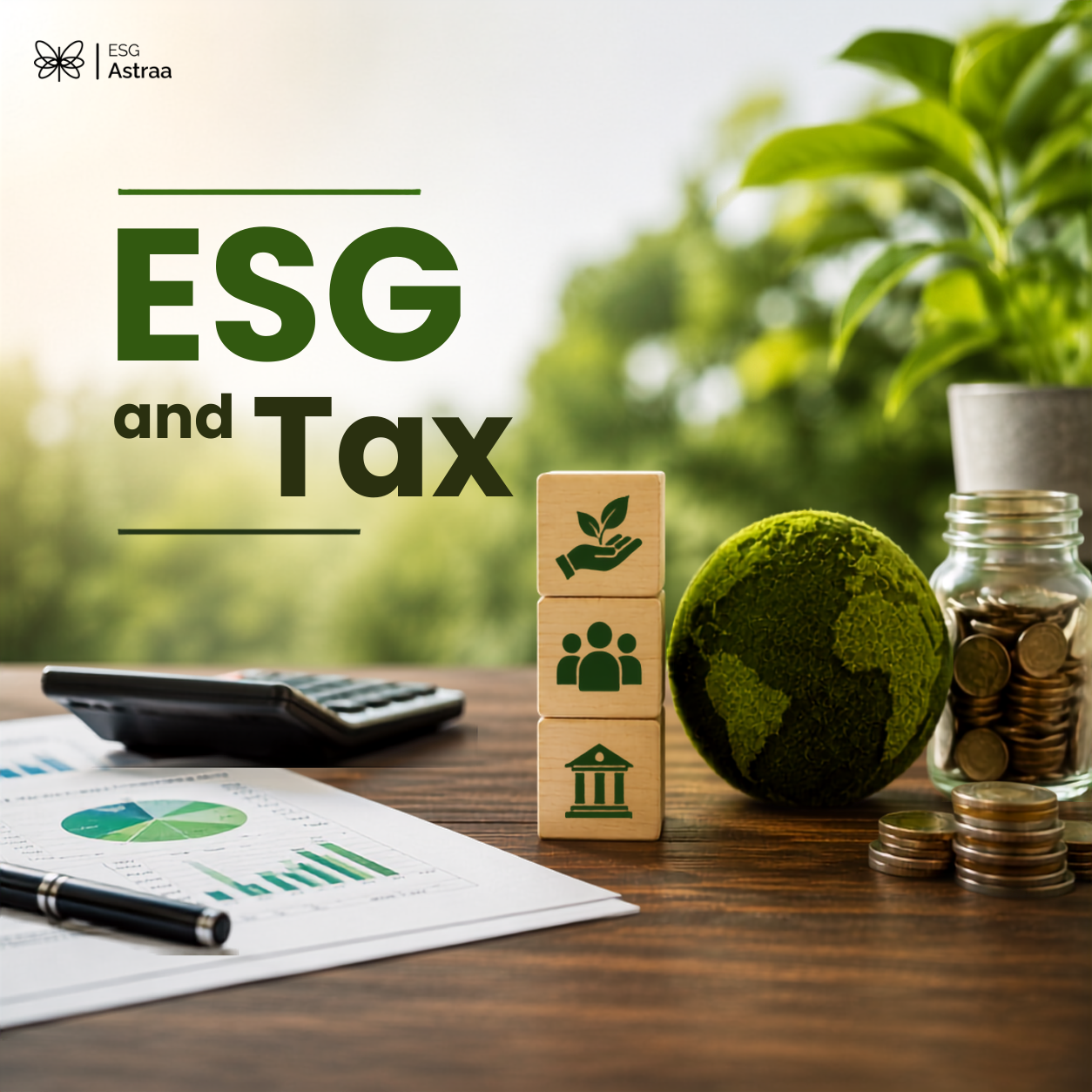
ESG and Tax
The Emerging Intersection Indian Companies Are Not Prepared For
Reading Time
4 min
Article Sections
6
Share Links
3
On This Page
Article Section
Introduction
Tax strategy has traditionally lived far from the ESG conversation, handled quietly by finance teams while sustainability teams focused on emissions, labour practices, and board diversity. That separation is starting to look like a governance blind spot. Investors, NGOs, and even ESG rating agencies increasingly read a company's tax behaviour as a direct signal of how seriously it takes governance.
The shift is driven by concrete developments. The Global Reporting Initiative's GRI 207 standard now asks companies to disclose tax strategy and country-by-country payments, the OECD's Pillar Two global minimum tax is reshaping how multinationals structure their operations, and institutional investors are asking pointed questions about profit-shifting that would have gone unasked five years ago.
Most Indian companies still treat tax and ESG as separate functions reporting to different parts of the organisation, and that gap is becoming a real governance liability rather than an administrative inconvenience.
Article Section
How Tax Became an ESG Issue?
Tax became an ESG issue largely through the GRI 207 standard, introduced specifically to address stakeholder concern that aggressive tax planning undermines the social contract companies claim to uphold elsewhere in their ESG reporting. The standard asks for public country-by-country disclosure of profit, tax paid, and business activity, a level of transparency few companies globally have embraced voluntarily.
The OECD's Pillar Two framework, now being implemented across major economies, adds a global minimum tax that directly limits the profit-shifting strategies large multinationals have historically used. For Indian companies with international operations or subsidiaries, this changes the calculus around tax structuring in ways that intersect directly with governance disclosure.
Globally, companies have already faced reputational damage when investigative reporting exposed a gap between their public sustainability commitments and their private tax arrangements. The pattern is consistent, aggressive tax avoidance discovered after the fact reads as a governance failure, not just a tax planning choice.
Article Section
What the Analysis Reveals?
Why Has Tax Become a Governance Issue?
Tax transparency has become a proxy for institutional trust. A company that discloses its emissions data in granular detail while keeping its tax structure opaque sends a mixed signal about how genuinely its governance commitments extend across the business, and investors have started noticing that inconsistency.
Where Do Indian Companies Fall Short?
Tax and ESG functions in most Indian companies operate in separate silos, reporting to different leadership and rarely coordinating on disclosure. BRSR currently asks little about tax strategy specifically, which means many companies have never had to think through how their tax positions would read under GRI 207-style scrutiny.
What Is the Reputational and Regulatory Risk?
ESG rating agencies are beginning to factor tax conduct into governance scores, and investors conducting ESG due diligence increasingly ask about effective tax rates and jurisdictional structuring. Companies unprepared for these questions risk both rating downgrades and uncomfortable investor conversations they did not anticipate.
Article Section
What This Means for Companies and Boards?
What Should Companies Do Now?
The first step is structural, bringing tax and ESG or governance teams into the same conversation rather than leaving them to operate independently. Companies should assess whether their current tax positions would withstand GRI 207-style public scrutiny before an external party forces the question.
Where Does the Opportunity Lie?
Companies that get ahead of this can turn tax transparency into a genuine differentiator with global institutional investors, many of whom now screen explicitly for responsible tax conduct as part of governance assessment. Early movers signal maturity that peers still treating tax as a black box cannot match.
What Should Boards Be Asking?
Boards should ask whether they have real visibility into the company's tax strategy, whether tax risk is formally part of the enterprise ESG risk assessment, and whether the company could defend its tax positions publicly if asked to.
Article Section
Conclusion
Tax is no longer a back-office function invisible to ESG scrutiny. It has become a governance signal that investors, rating agencies, and stakeholders are learning to read alongside emissions data and board composition.
As global tax transparency standards tighten and Pillar Two implementation spreads, Indian companies that integrate tax into their ESG governance now will avoid being caught unprepared when disclosure expectations catch up with them.
Article Section
Frequently Asked Questions
Why is tax considered an ESG issue?
Tax behaviour is increasingly read as a governance signal, since aggressive tax avoidance conflicts with the transparency and accountability companies claim in their broader ESG commitments.
What is GRI 207?
GRI 207 is a Global Reporting Initiative standard that asks companies to publicly disclose their tax strategy and country-by-country tax payments.
Does BRSR require tax disclosure?
BRSR currently asks little about tax strategy specifically, leaving a gap between what Indian companies disclose and what global ESG tax standards expect.
How does this affect ESG ratings?
ESG rating agencies are beginning to factor tax conduct into governance scores, meaning opaque tax practices can now affect a company's overall ESG rating.
What should companies do to prepare?
Companies should bring tax and ESG governance teams together and assess whether their current tax positions could withstand public, GRI 207-style scrutiny.
Keep Reading
Related Blogs
All Industries
ESG and the Indian SME
Why Small Suppliers Are Suddenly Under Pressure From Their Largest Clients
Read more
All Industries
Five ESG Metrics Every Investor Pitch in India Should Now Include
Most Still Don't Know
Read more
All Industries
Carbon Credits vs Carbon Offsets
Understanding the Difference Before Making Climate Claims
Read moreNext Step
Ready to turn ESG complexity into strategic advantage?
Talk to ESG Astraa about disclosures, climate strategy, governance controls, and execution support for your team.